A vehicle offer can become more competitive without the advertised price moving at all. A dealer may add cashback, extend the warranty, include scheduled servicing or introduce a registration benefit while keeping the headline vehicle price exactly the same.
For automotive teams, that creates a practical problem. If competitive monitoring focuses mainly on price changes, important movements in the market can be missed. Automotive incentive comparison provides a more complete way to understand how competing vehicle offers are being structured and where additional customer value is being added.
This is particularly relevant for regional teams working across the UAE, Saudi Arabia, Qatar and Kuwait, where similar vehicles can be promoted through different combinations of discounts, service packages, warranty support and dealer-specific benefits.
What Is Automotive Incentive Comparison?
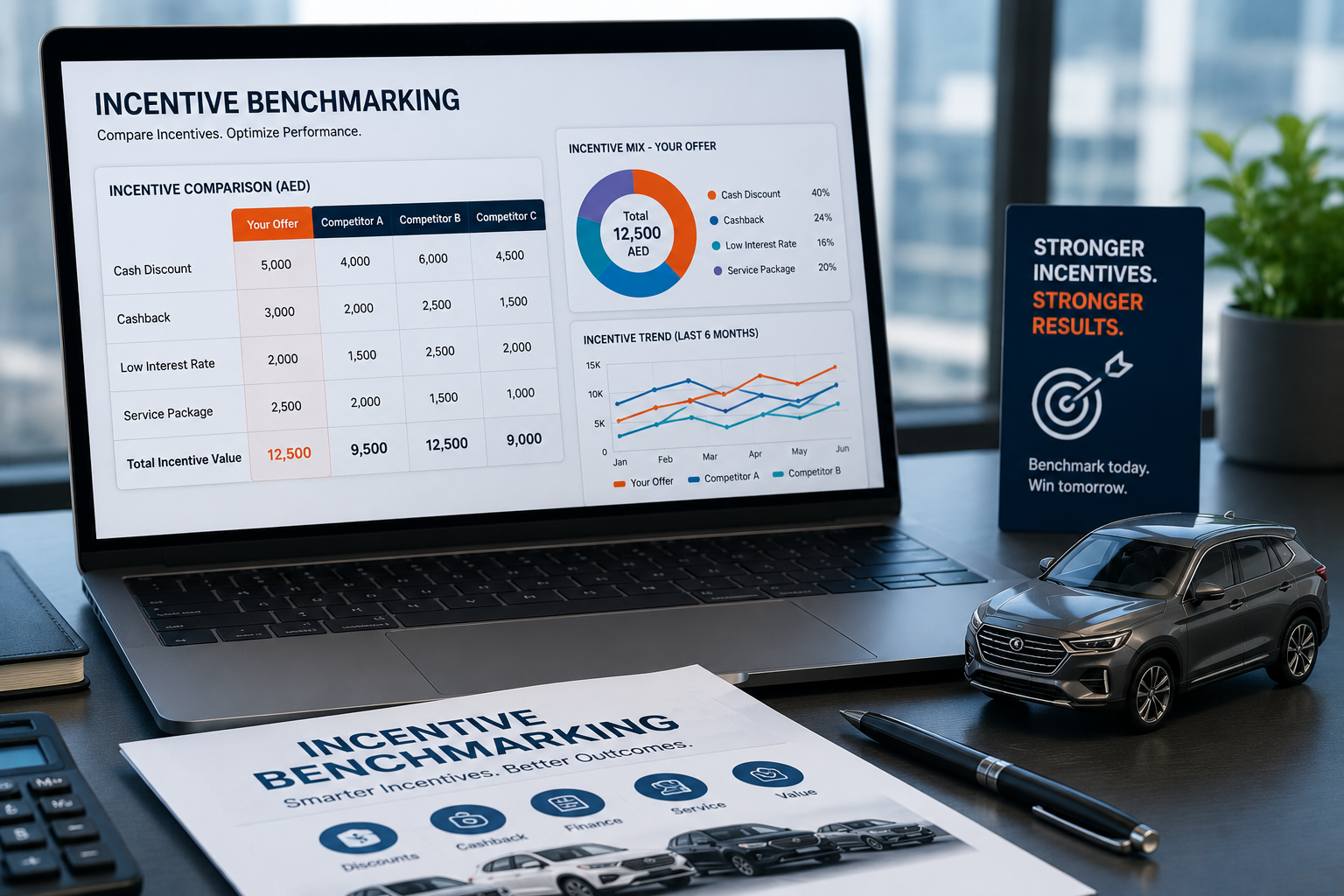
Automotive incentive comparison is the structured process of identifying and comparing the financial and value-added benefits included in competing vehicle offers.
Instead of treating every promotion as a single generic offer, the comparison separates the individual components so teams can see what is actually creating value.
Those components may include:
- Cashback
- Direct discounts
- Complimentary service packages
- Extended warranty coverage
- Registration support
- Insurance-related benefits
- Roadside assistance
- Finance-related promotions
- Dealer-specific promotional benefits
A structured Automotive Incentive view makes it easier to compare these benefits consistently instead of relying on headline promotional messages alone.
Why Vehicle Price Does Not Tell the Whole Story
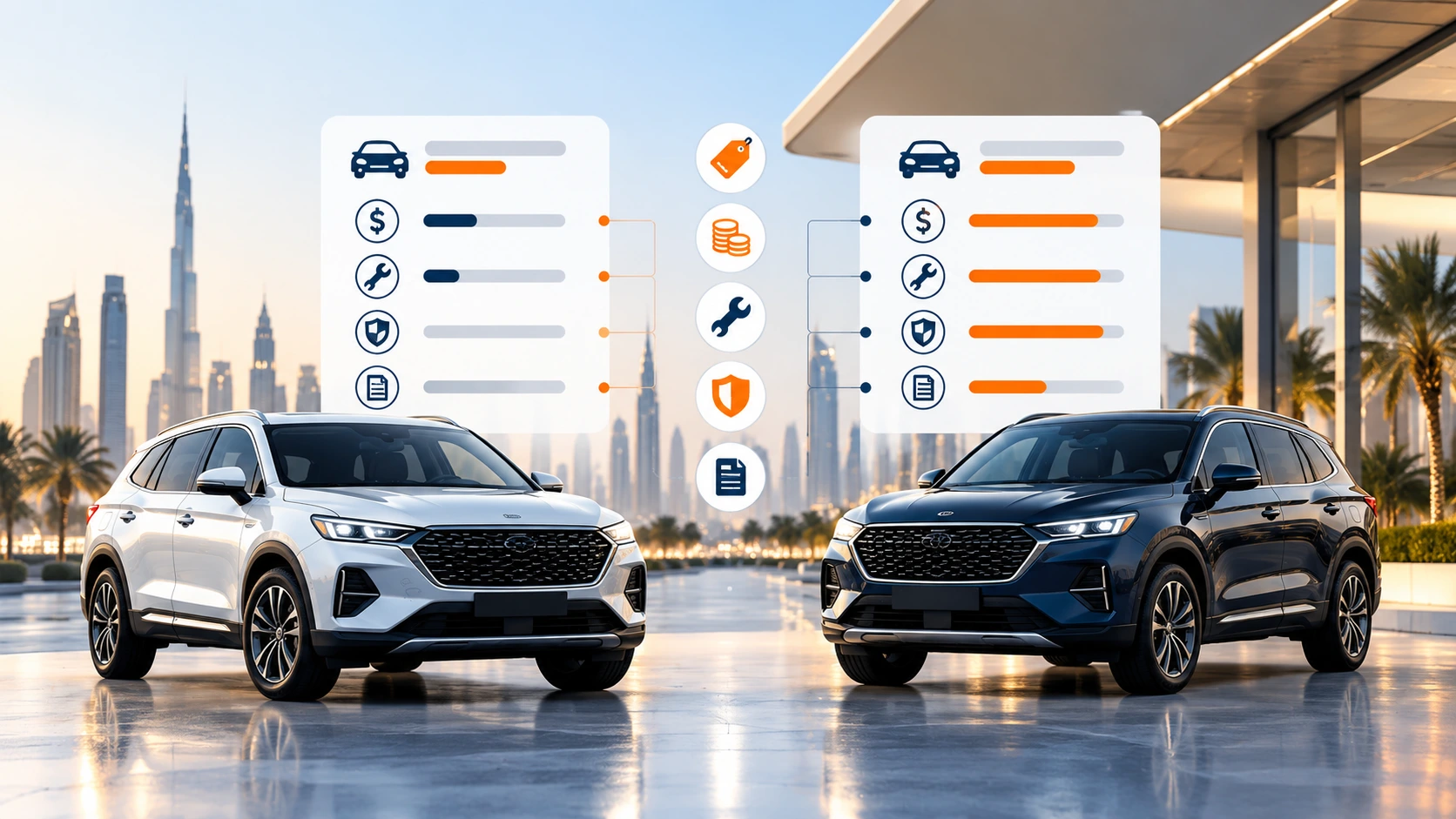
Consider two competing SUVs. Vehicle A is advertised at AED 125,000, while Vehicle B is advertised at AED 128,000.
Based on price alone, Vehicle A appears to have an advantage. But Vehicle B may include three years of servicing, additional warranty coverage and registration support. Once those elements are considered, the difference between the two customer propositions becomes much less obvious.
The purpose of incentive comparison is not to automatically declare one vehicle better than another. It is to make the structure of each offer visible enough for commercial teams to compare them intelligently.
A competitor does not need to reduce vehicle price to strengthen its customer proposition.
Five Incentive Components Automotive Teams Should Compare
1. Cashback and Direct Discounts
Cashback and price discounts are usually the easiest incentives to recognize because they have a direct financial relationship with the transaction. Even so, teams should distinguish between an advertised price reduction and cashback because they represent different promotional approaches.
2. Service and Maintenance Packages
Complimentary servicing can influence the ownership proposition without changing the purchase price. Where the information is available, teams should consider the duration and scope of the service package rather than simply recording that free service is included.
3. Warranty Coverage
Additional warranty coverage can strengthen an offer by extending customer support beyond the standard package. A useful competitive signal is whether the warranty has been introduced, extended, reduced or removed from the previous offer.
4. Registration, Insurance and Ownership Benefits
Registration support, insurance-related offers and roadside assistance may appear less significant than a large price reduction when viewed individually. However, several ownership benefits combined can materially change the overall customer proposition.
5. Dealer-Specific Promotions
Not every incentive is introduced at manufacturer level. Dealers may promote particular vehicles through local campaigns, limited-period offers or additional benefits. This is where Dealer Competitive Intelligence adds useful local context.
The Most Common Mistake in Incentive Comparison
One of the most common mistakes is reducing every competitive discussion back to vehicle price.
Imagine a competitor keeps its advertised price unchanged for six weeks. A price-only monitoring process may show no movement. During the same period, however, the competitor may add a service package and extend the warranty.
From the customers perspective, the offer has changed. From a price-only dataset, nothing happened.
That difference is why incentive monitoring should focus on changes in the complete offer rather than price movements alone. Pricing still remains an essential signal, and teams can connect incentive activity with Automotive Pricing Intelligence to understand how both elements are moving together.
Automotive Incentive Comparison and Total Offer Value
Incentive comparison and Total Offer Value are closely related, but they answer different questions.
Incentive comparison identifies the individual benefits included in an offer. It helps teams see whether a vehicle includes cashback, servicing, warranty, registration support or other promotional components.
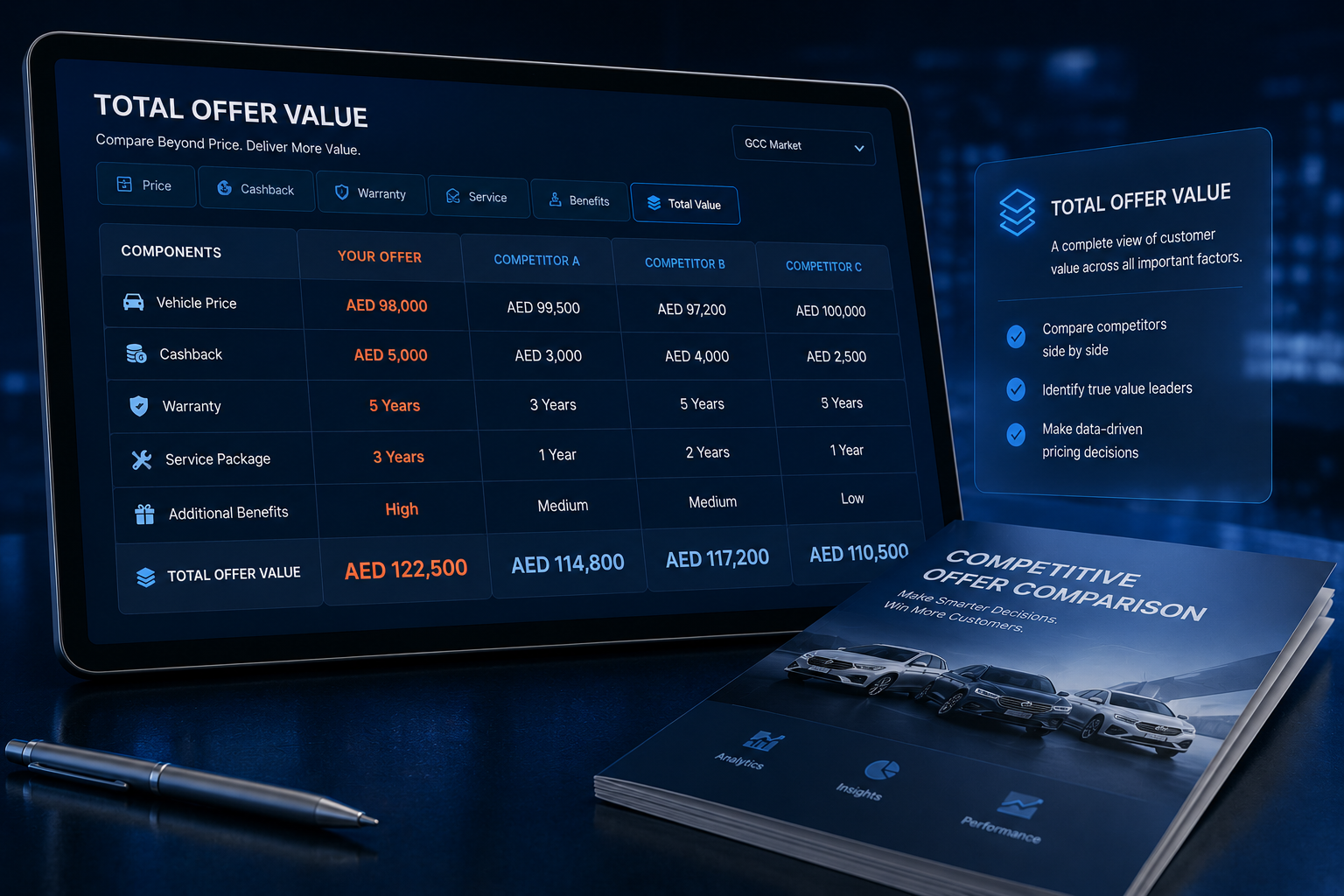
Total Offer Value looks at the broader proposition by considering how those components work together with vehicle price.
This distinction becomes useful when competitors follow different commercial strategies. One brand may compete aggressively through headline price. Another may protect its advertised price while adding ownership benefits.
Both strategies can affect competitive positioning even though they look very different in market communications.
Why GCC Incentive Comparison Needs Local Context
Regional automotive teams often operate across several GCC markets, but promotional strategies should not be assumed to be identical across the region.
An offer available in the UAE may include a different combination of benefits from a comparable offer in Saudi Arabia, Qatar or Kuwait. Dealer campaigns can add another layer of variation within each market.
A useful incentive comparison therefore needs to answer more than whether a benefit exists. Teams also need to know where the offer is available, which vehicle it applies to and whether the structure has changed.
For a broader view of how pricing, incentives, dealers and market movement fit together, read Automotive Market Intelligence for Smarter GCC Decisions. That article looks at the wider competitive intelligence environment, while this article focuses specifically on how automotive incentives should be compared.
Look for Changes, Not Just Current Offers
A long list of promotions can quickly become difficult to interpret. What often matters more is identifying what changed from the previous offer.
Useful competitive signals may include:
- A competitor introducing cashback for the first time
- A two-year service package becoming a three-year package
- An extended warranty being added or removed
- A registration benefit appearing in one market but not another
- A dealer increasing promotional support around a particular model
- A price remaining unchanged while customer benefits increase
These changes provide commercial teams with something specific to investigate rather than simply presenting another list of current offers.
How Different Automotive Teams Use Incentive Intelligence
Pricing Teams
Pricing teams can use incentive activity as additional context when reviewing vehicle positioning. A competitor with a higher advertised price may still be presenting a strong customer proposition through additional benefits.
Sales Leaders
Sales teams can use competitive incentive information to understand why another offer may be gaining attention in a particular market or vehicle segment.
Marketing Teams
Marketing teams can examine which benefits competitors are emphasizing in their campaigns and how promotional messages are changing over time.
Dealer and Regional Management
Dealer and regional teams can use a structured comparison to distinguish between isolated local promotions and broader market movements that may require additional attention.
Five Questions to Ask When a Competitor Changes an Incentive
A useful evaluation can be reduced to five practical questions:
- What changed? Identify the new, removed or modified benefit.
- Where did it change? Understand the country, market or dealer involved.
- Which vehicle is affected? Keep the comparison relevant to the correct model or variant.
- How does it affect the complete offer? Review the incentive together with vehicle price and other customer benefits.
- Does it require action? Use competitive intelligence as context, not as an automatic instruction to respond.
That final question is especially important. Good competitive intelligence does not mean copying every promotion in the market. Sometimes the right decision is to change an offer. Sometimes it is to investigate further. In other cases, no action may be necessary.
From Incentive Tracking to Competitive Intelligence
The value of automotive incentive comparison is not in creating a larger spreadsheet of promotions. It is in making competitive changes easier to understand.
When cashback, service packages, warranty coverage, dealer promotions and other benefits are viewed alongside vehicle pricing, teams gain a clearer picture of how competing vehicles are being positioned.
This also supports a broader intelligence process: Observe → Compare → Understand → Decide.
Teams first observe relevant activity, compare offers using consistent categories, understand what has materially changed and then decide whether the change deserves commercial attention.
Learn more about this workflow on How ALIA Works.
Building a Clearer View of Automotive Incentives
Automotive offers are increasingly difficult to judge through headline price alone. Cashback, servicing, warranty coverage, registration support and dealer-specific promotions can all change the strength of a customer proposition without changing the advertised price.
A structured automotive incentive comparison helps OEMs, dealer groups and regional teams understand those differences more consistently.
For GCC automotive teams, the most useful questions are straightforward: What incentive changed? Where did it change? Which vehicle is affected? How does the complete offer compare? And does the change deserve attention?
ALIA brings automotive offer signals into a structured intelligence workflow so teams can evaluate pricing, incentives, dealer activity and competitive propositions with greater context.
Explore Automotive Incentive, learn How ALIA Works, or request a demo to learn more.